
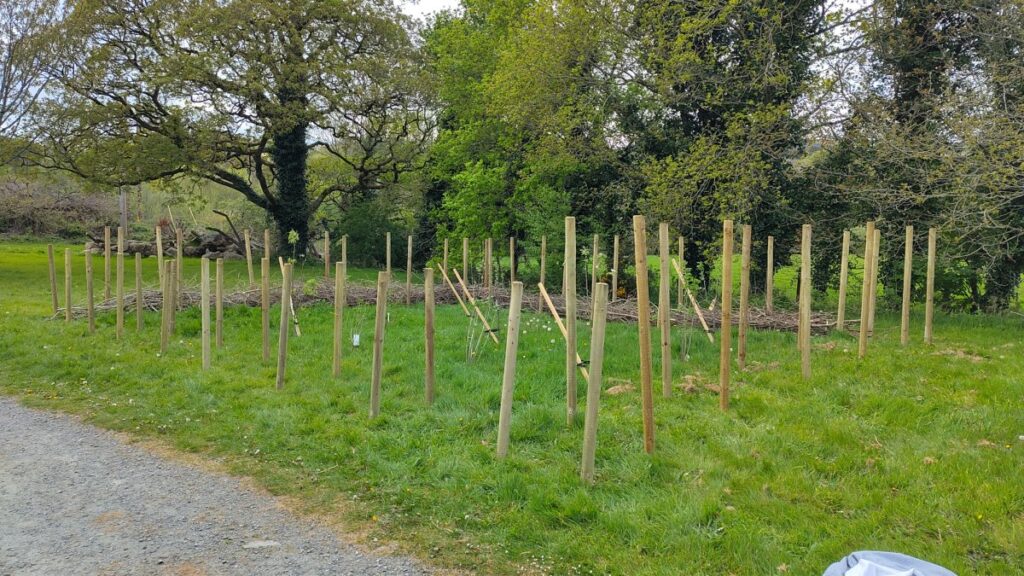
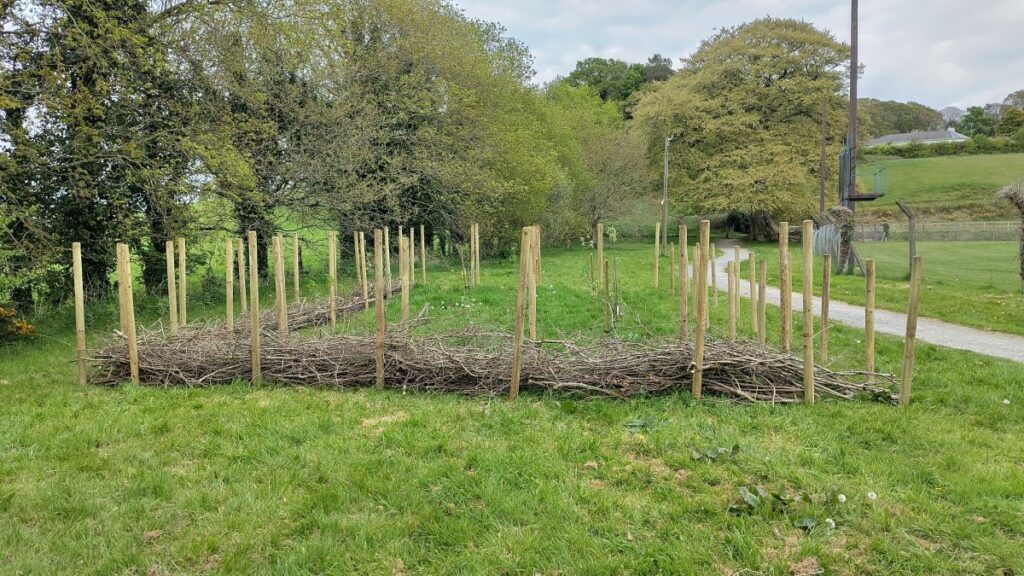
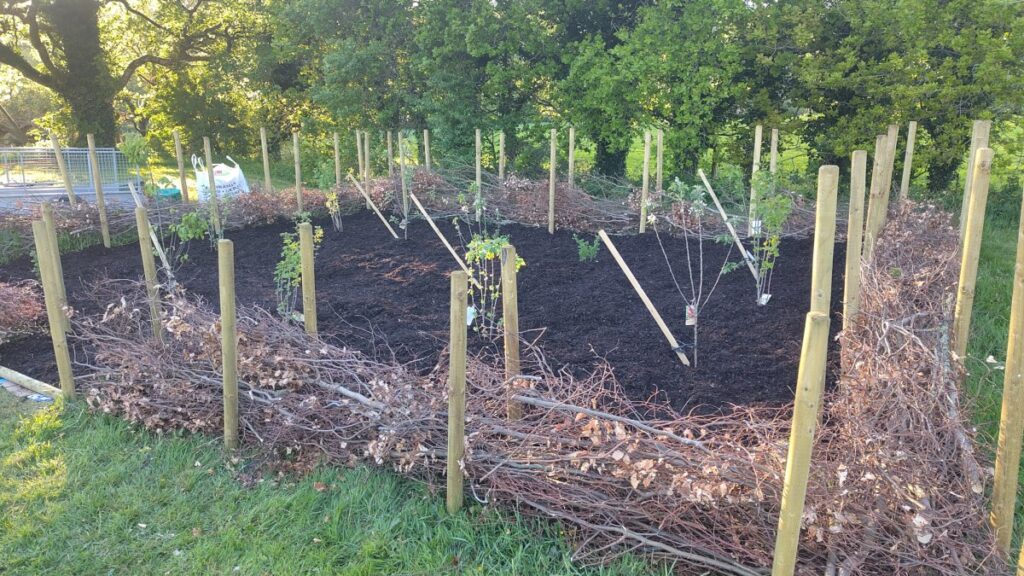
Once the planting was complete on the new mini orchard, the Shillelagh Tidy Towns group set about constructing a dead hedge around the young trees and bushes to protect them as they get established. For those unfamiliar with the term, a dead hedge is essentially a rustic boundary structure built from cut branches and woody material woven or stacked between upright stakes.
In this case, the branches used in the dead hedge were sourced from the trimming of local hedgerows — and importantly, all of that hedge cutting was carried out outside of the bird nesting season, in line with best environmental practice and Irish wildlife legislation. This means no nesting birds were disturbed in the process, and what might otherwise have been regarded as waste material has instead been given a second life as a functional and wildlife-friendly structure.
Biodiversity loss is one of the most pressing environmental challenges facing Ireland today, and even small-scale initiatives like this one can make a meaningful difference at a local level. By introducing a variety of flowering and fruiting plants, the orchard creates a rich habitat that supports insects, birds and other wildlife throughout the seasons while the dead hedge brings even more benefits.
The Many Benefits of a Dead Hedge
The dead hedge brings with it a surprising range of benefits:
- Wildlife habitat: As the woody material slowly decomposes, it becomes a haven for insects, beetles, hedgehogs, wrens and other small creatures. Dead wood is one of the most important habitats for biodiversity in any landscape.
- Protection for young plants: The structure provides a windbreak and a physical barrier that shelters the newly planted trees and bushes while they find their feet.
- Zero waste: By using hedge trimmings that would otherwise be chipped, burned or sent to landfill, the group has closed a local loop and kept resources within the community.
- Natural decomposition: Over time, the dead hedge breaks down and enriches the soil, adding organic matter and nutrients in a slow, gentle process that mirrors what happens naturally on the forest floor.
- Aesthetic character: There is something quietly beautiful about a well-built dead hedge. It speaks of craft, of connection to the land and of the kind of thoughtful land stewardship that has sustained rural Ireland for generations.
Keeping the Weeds at Bay the Natural Way
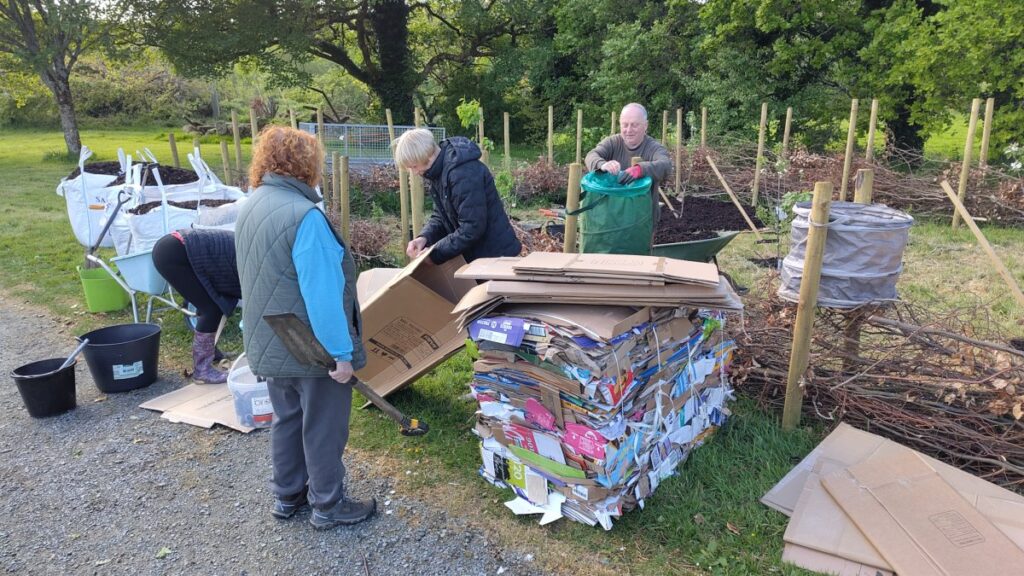
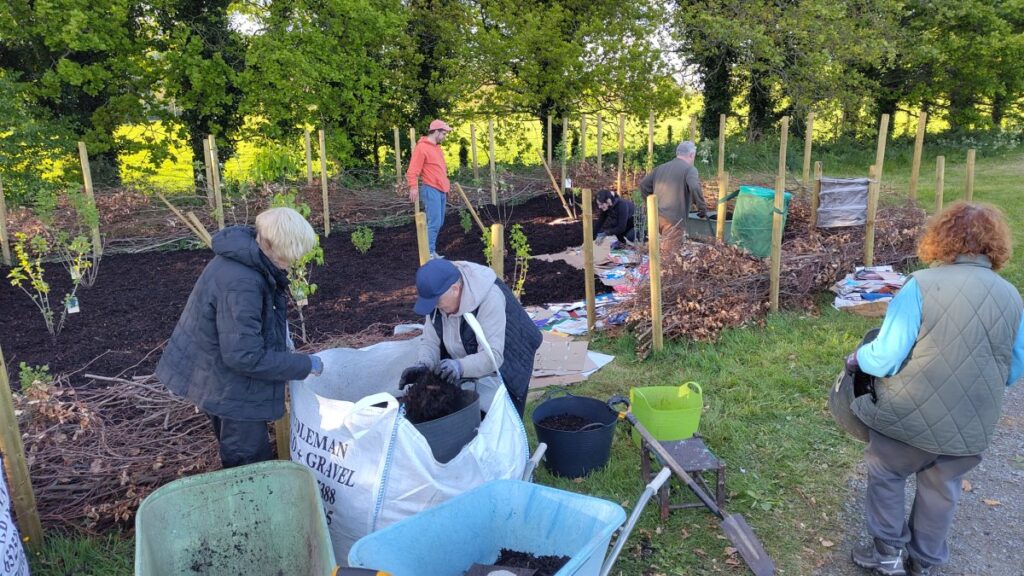
To give the newly planted orchard the best possible start, the group also laid cardboard — generously sourced from the local shop — directly on the ground around the plants before covering it with a thick layer of bark chip mulch. This tried-and-trusted method suppresses grass and weeds without the need for chemical herbicides, while also retaining moisture in the soil and gradually improving its structure as the cardboard breaks down beneath the mulch. It is simple, effective and entirely in keeping with the environmental spirit of the project.
A Heartfelt Thank You to Our Volunteers
None of this would have been possible without the time, energy and goodwill of the volunteers who’s contribution matters enormously. This orchard belongs to Shillelagh and the group has achieved something lasting here. Long after the bark chip settles and the first blossoms appear, people will be walking past this little orchard and smiling — Here’s to many years of good harvests, buzzing bees and a greener, wilder, more vibrant Shillelagh.
Shillelagh Tidy Towns is always looking for new members and volunteers. If you would like to get involved in future projects, please get in touch.